I Ghosted 33,000 People. Here's Why I'm Doubling Down on Section 8 Rentals in a Strange Real Estate Market
After three months silent, Collin Mitchell explains why he's doubling down on Section 8 rentals while big investors walk away — and the remote playbook behind 42 doors in St. Louis.
I ghosted 33,000 people on LinkedIn that follow me. Not on purpose to be rude. On purpose to survive the season I was in.
For the last three months, I stopped posting. No updates. No deal breakdowns. No behind-the-scenes. Anyone who knows me knows that is not normal. I've been building businesses since 2012. I've sold three of them. Slowing down is not my default setting.
But I had learned something the hard way: sometimes you have to slow down before you can go fast again.
This post is the long version of why I stepped back, what I saw in the market while I was gone, and why I'm doubling down on Section 8 rentals while people I used to look up to are walking away from real estate.
My priorities were out of order
Here's the honest version. Some of my priorities got mixed up.
When you run multiple companies, a deal pipeline and a rental portfolio, the business starts setting the agenda. Every deal feels urgent. Every fire feels like yours to put out. And the things that matter most quietly slide down the list.
My order is simple: God, family, then business. For a stretch, I lost sight of what I really mastered.
So I regrouped. Here's what that actually looked like:
- Having quiet time in the morning for prayer and family needed to come first
- Giving myself some grace to not have to wake up at 4am and hit the gym every morning
- Letting go of some things and allowing my capable team to manage things for me
Patience does not come easy to me. But the pause forced a question every investor should ask: Am I building something that serves my life, or a life that serves my business?
Why the 2026 market feels so strange
The market is strange because investors are a bigger slice of a shrinking pie. Share is up. Volume is down. Money is expensive again.
| Signal | Latest reading | Source | |---|---|---| | 30-year mortgage rate | 7.28% on Oct 1, 2026, vs 6.34% a year earlier | Trading Economics / Freddie Mac | | Investor share of home purchases | ~32% in Q1 2026, 4th straight quarter above 30% | BatchData Q1 2026 | | Investor purchase volume | 236,053 in Q1 2026, down 22.9% YoY, a nine-quarter low | BatchData Q1 2026 | | Existing-home sales | 741,000 in Q1 2026, down from 908,000 in Q4 2025 | BatchData Q1 2026 | | Single-family rent growth | +1.8% YoY in July 2026, below last year's 2.3% | Cotality SFRI |
Read those together and you get the strange part. Rates climbed back above 7% in late September for the first time since January 2025. Rents are growing, but slowly. Traditional buyers stepped back, so investors look bigger on paper even while buying fewer homes.
Redfin's count tells the same story from another angle: investor purchases in Q1 2026 fell to their lowest level since 2020 across 39 large metros (Norada summary of Redfin).
That's the environment where people start quitting.
People are quitting. I'm doubling down.
The biggest players are pulling back the hardest. That's the opening for operators like me.
Cotality's Q2 2026 data shows mega investors (1,000+ homes) cut monthly purchases about 40% versus the prior year. Large investors (100–999 homes) cut 21%. Medium investors (10–99) cut 17% (HousingWire). Mega investors dropped from about 2.5% of all purchases to 1.3%.
Meanwhile, small investors own the market. Investors with 1–10 homes hold roughly 96% of investor-owned single-family stock. Institutions with 1,000+ homes hold about 2% (BatchData).
So when you hear "Wall Street is buying every house," the data says otherwise. The people still buying are mostly entrepreneurs with small portfolios and local edge.
The people I used to look up to who quit? Most were built for a different market. Cheap money. Fast appreciation. Volume flips with thin margins. When rates doubled, that model broke.
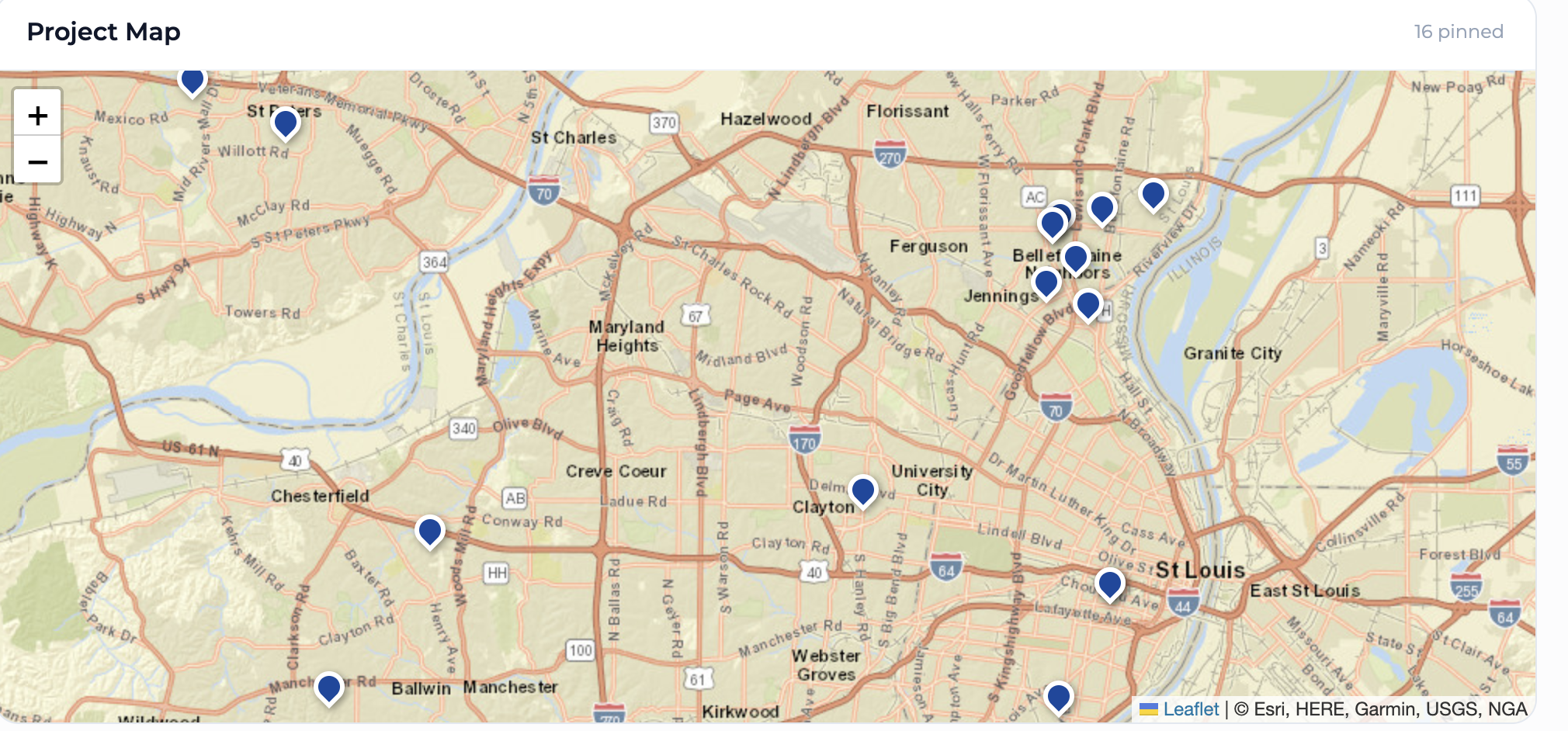
Mine is built for cash flow. That's why I'm still buying. I closed on four more rentals the day I posted this, and I have 16 active projects running.
Why BRRRR plus Section 8 still works for me
BRRRR works when you buy right and the rent is reliable. Section 8 gives me the reliable part.
BRRRR is simple: Buy, Rehab, Rent, Refinance, Repeat. You buy below value, force equity with the rehab, place a tenant, then refinance to pull capital back out. In a high-rate market, the refinance is the hard step. That's exactly why the buy and the rent have to be right.
Three data points make Section 8 in the Midwest work for me right now:
- The rent check is federally backed. Congress passed the FY2026 HUD funding bill in February 2026, with $34.9 billion for renewing tenant-based rental assistance, including vouchers (BRHP). The proposal to turn vouchers into block grants was not adopted (Skybriz).
- The Midwest is leading rent growth. Cotality reports Midwestern metros like Chicago leading single-family rent growth, while parts of the South stay soft (Cotality). St. Louis sits in that region.
- Buyers are scarce, so discounts are real. Fewer retail buyers and fewer big investors means less competition on distressed properties.
My numbers: 42 Section 8 doors, self-managed remotely, 16 active rehab projects and just closed on 4 more rentals today.
The playbook: flipping virtually and self-managing 42 doors
Remote works when systems and people replace your physical presence. We did 100 deals in St. Louis before I ever visited.
Buying remotely
- Underwrite to the refinance, not the purchase. If the after-repair value and rent don't support pulling most of my cash back out at today's rates, I pass.
- Stress-test at 7%+. Rates are above 7% now. If the deal only works at 6%, it doesn't work.
- Get eyes on every property through a trusted local team and photo/video walkthroughs before closing.
Rehabbing remotely
- One project manager owns timelines and draws across all active jobs. I manage the manager, not the contractors.
- Pay against documented progress. Photos tied to each draw.
- Rehab to Section 8 inspection standard from day one, so units pass the first time.
Self-managing Section 8 remotely
- Build a relationship with the local housing authority. Know the payment standards and inspection schedule.
- Screen for stability. A good voucher tenant often stays for years, which cuts turnover cost.
- Write every repeat task down. Inspections, renewals, maintenance requests. If it lives in my head, it doesn't scale.
Running the business
- We opened an office in Clayton this summer with a full-time team member on the ground.
- I spend at least four days a month in St. Louis.
- I have cut our operational budget significantly by leveraging AI and vibe coding tools we use everyday.
The risks I'm watching
Doubling down doesn't mean ignoring risk. Here's what keeps me sharp:
- Voucher funding pressure. HUD's FY2026 funding notice warns of extensive shortfall levels at some housing authorities and says HUD may stop funding vacant units if needed (PHADA). The FY2027 budget request again proposes cutting HUD by about 13% (Skybriz). Shortfalls can mean longer waitlists and lower payment standards.
- Refinance risk. With rates above 7%, cash-out refis return less. I'd rather leave cash in a great deal than force a bad refi.
- Slow rent growth. National single-family rent growth is under 2%. I don't underwrite rent bumps.
- My own pace. The biggest risk to this business has been me running too fast. That's the lesson of the pause.
So I'm back
I'm done keeping to myself.
Starting now, I'm sharing "almost daily" what it's really like to flip houses virtually, manage 42 rentals remotely and grow a Section 8 portfolio. The good, the ugly and everything in between. Real numbers. Real mistakes. Real deals.
If you're an investor wondering whether this market is still worth it, follow along. If you want to build a business that doesn't cost you your family, follow along too.
God, family, then business. In that order this time.
Follow me on LinkedIn to see every deal, rehab and rental update as it happens.
Sources
- BatchData Investor Pulse, Q1 2026
- HousingWire on Cotality Q2 2026 investor data
- Cotality Single-Family Rent Index, July 2026
- Trading Economics, 30-year mortgage rate, Oct 2026
- Norada summary of Redfin investor data
- BRHP on FY2026 HUD funding
- Skybriz on Section 8 changes in 2026
- PHADA on HUD's FY2026 HCV funding notice
Want numbers like these working for you?
Book a strategy call and I'll map out a Section 8 rental plan around your capital and timeline.
See If You QualifyWant the framework behind this post?
Get my free 5-step cash flow framework — the exact checklist I use to evaluate every deal before I commit a dollar.